Happy Fourth of July!

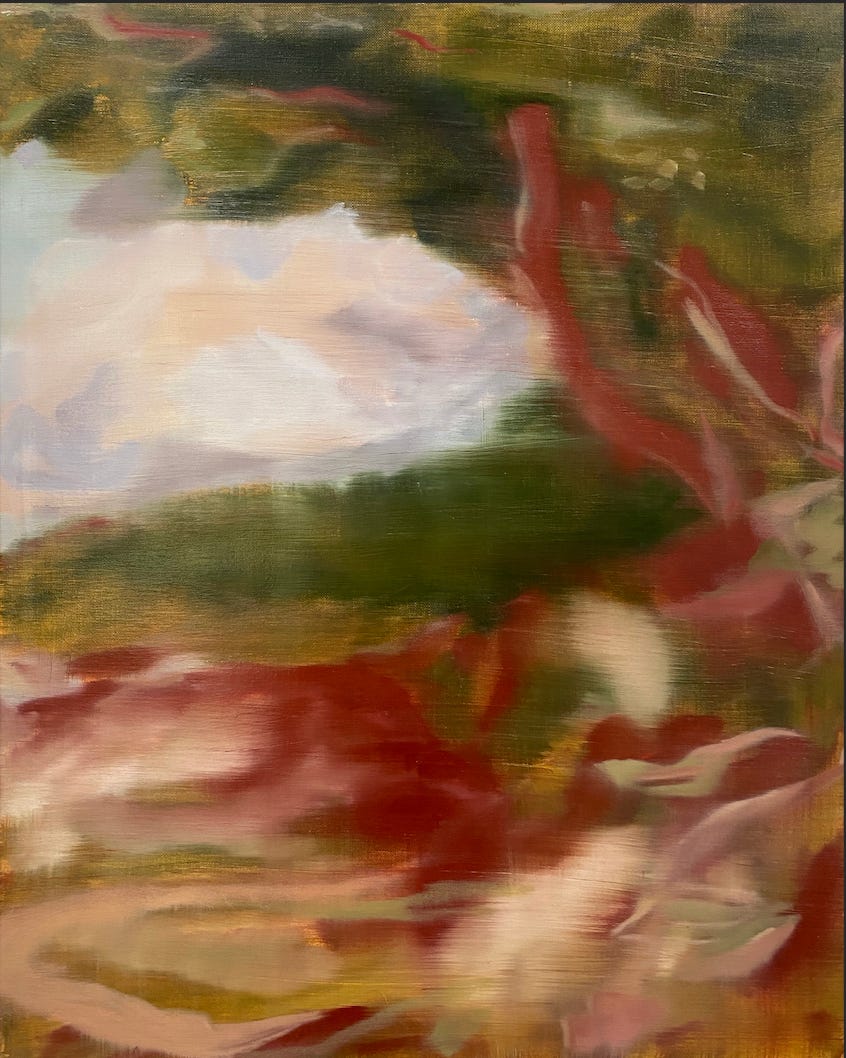
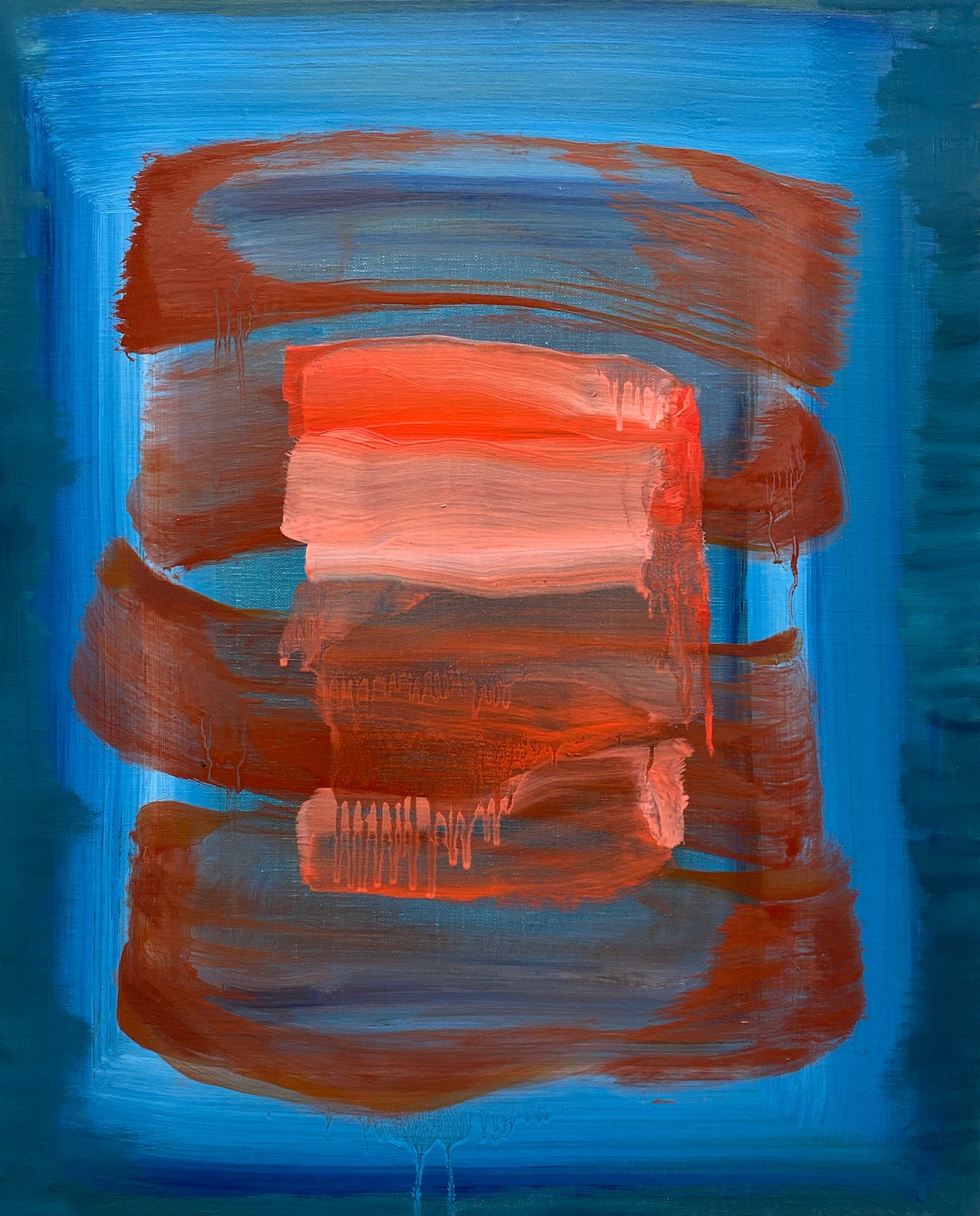
In oil painting, like an alchemist, I first have to remove the light and create a hazy prima materia. I tone a canvas and create a mottled mystery greenish pinkish blueish yellowish purplish greyish taupish “griege”, often with globs of unused paint mixtures lying around. The weirder that first layer, the better and more sparkly all the layers will lie above it. It is the soul of the painting. I build upward, adding darker and lighter colors whenever and wherever I want, in any sequence. This is thrilling and wild. Painters know this as the “Additive Approach”.
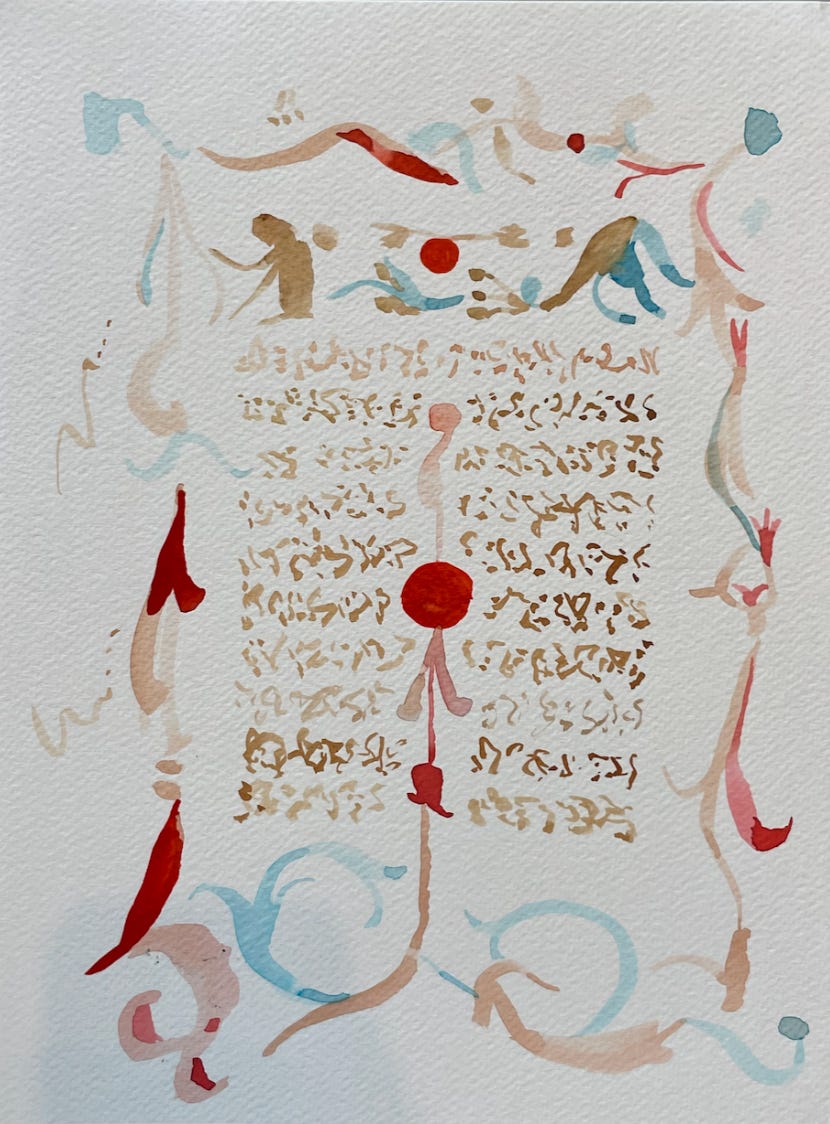
In water media, however, one often does the opposite, dark over light — which means carefully and thoughtfully preserving the white of the paper and laying shadows to cover over it. I imagine a giant flashlight shining from below the surface upward and everything above is meant to darken and subtract its rays. If I want to save a glistening reflection on a dew drop, I have to know these details in the beginning and guard that reflection with my life. Paper is unforgiving. Once I cover a light passage, I can’t recover it. The method is beautiful but exacting. Painters know this as the “Subtractive Approach.” I often sketch with water media and then move to oil so I am intimately familiar with both.
When I teach about these two approaches, I place two passages of scripture at the top of the handout.
Do unto others as you would have them do to you. - Luke 6:31, New Testament What is hateful to you, do not do to your neighbor - Hillel the Elder, The Talmud One prescribes an action and the other marks a boundary. Luke tells you what to do. Hillel tells you what not to do.
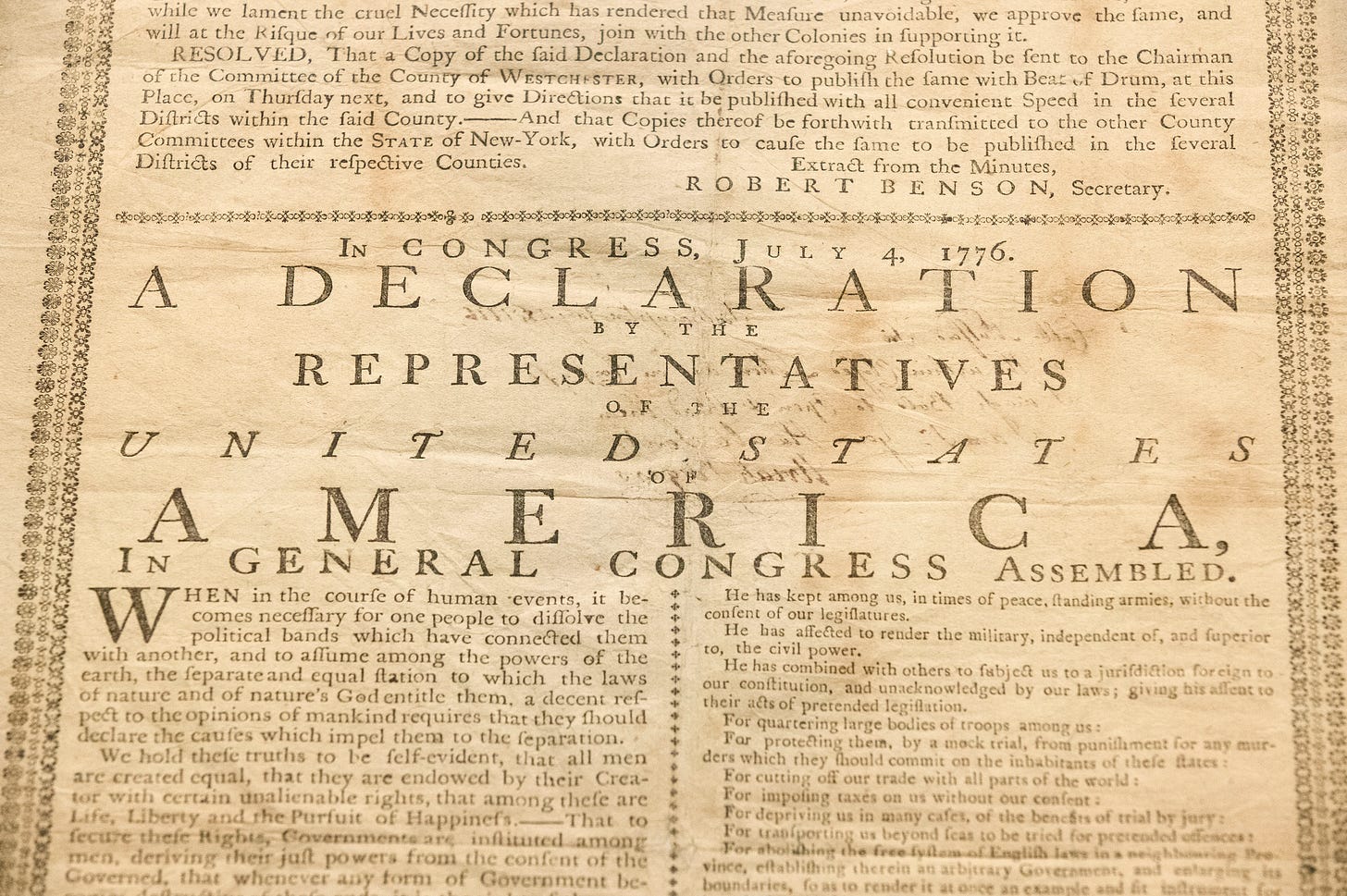
This Fourth of July, I reflect on the Constitution. The original document largely defines what the government can do — the powers of Congress, the executive, the courts. It is Luke. The Bill of Rights, however, works almost entirely in Hillel’s language. Congress shall make no law.The right shall not be infringed.No soldier shall be quartered.No warrant shall issue without cause. The genius wasn’t to list every freedom a citizen possesses — that would be impossible. It was to carve out the space the government may not enter. The First Amendment doesn’t say you may speak freely. It says the government may not stop you. What is hateful to you, do not do to your neighbor. At the time of its drafting, this was a radical inversion. Most governing documents told subjects what they were allowed to do. The Bill of Rights told power what it was forbidden to take.
The framers didn’t arrive at this formulation in a vacuum. Many of the Founding Fathers read The Old Testament in the original Hebrew and definitely knew about Hillel. America’s identity as a Judeo-Christian nation was born from the deep understanding of these ancient texts. Painters, theologians, and revolutionaries keep arriving at the same insight through different doors — that the most durable freedoms aren’t granted, they’re inherent and can only be taken away. I paint in oil because I love the additive method. I don’t want to be told what colors to use or what actors to cast in a play. I don’t want the surface to dictate how I plan the future. I want to create my own. I want the freedom to erase and invent whatever and whenever in any order I choose. On the Fourth of July, I find myself grateful to framers who understood that when it comes to our rights, we want to make like Hillel. Fascinatingly, the full quote from Hillel comes from the anecdote where a someone asked him to describe the entire Torah standing on one foot and his response was: That which is hateful to you, do not do to your fellow. That is the whole Torah; the rest is commentary; go and learn. I wonder what color tights he was wearing when he said that. I bet they were red white and blue. Happy 250th Birthday, America!
|
Art, Painting and Wild Ideas
In this newsletter, I share deep thoughts, dive into creativity and craft. I also post monthly Invitations to live artist interviews. Join me!